


Dental Implants in Columbia, MD
Dental implants replace missing teeth from the root up, giving you a stable, natural-looking smile that lets you eat, speak, and laugh with confidence. At Columbia Oral & Facial Surgery Center, Dr. Kenneth Wu and Dr. Mathew Woodward place implants for patients across Howard County, from a single missing tooth to a full arch.
What Are Dental Implants?
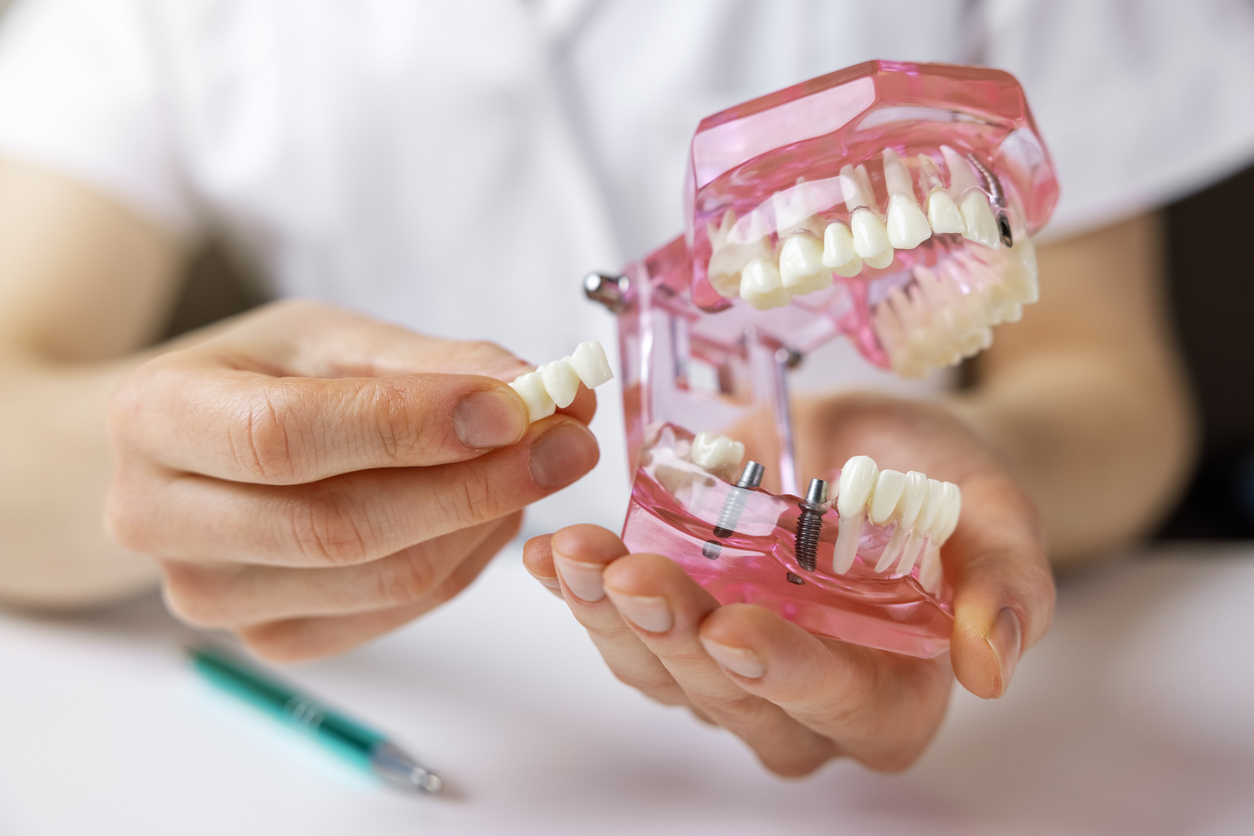
A natural tooth has two main parts: the crown you see when you smile and the root that anchors it in your jaw. When a tooth is lost, both are gone. A dental implant replaces the root with a small titanium post, the same time-tested material surgeons use for artificial joints.
Over the following weeks, the jawbone bonds with the titanium, creating a strong foundation. A connector called an abutment is then attached to the implant, and your dentist places a custom crown, bridge, or denture on top. In many cases, a temporary tooth can be attached right after the implant is placed.
Dental Implant Treatment Options
Every patient's needs are different. Explore the implant treatments we offer to find the one that fits your smile.
Replacing Missing Teeth
Whether you're missing one tooth or several, implants can replace them without relying on neighboring teeth for support. See how single-tooth and multiple-tooth implants restore your bite.
Missing All Teeth
If you're missing all your upper or lower teeth, implants can anchor a full set of replacement teeth, providing a more secure fit than traditional dentures.
Implant-Supported Overdenture
An overdenture snaps securely onto implants, so it stays in place while you eat and speak, yet can still be removed for daily cleaning.
Teeth-in-an-Hour™
Developed by Nobel Biocare, this computer-guided approach is planned from a CT scan, allowing fully functional teeth to be placed on implants in a single procedure that takes about an hour.
Bone Grafting for Implants
When the jawbone is too thin or soft to support an implant, a bone graft can rebuild it, making implants possible for more patients.
Planning Your Implant Treatment
Know what to expect before, during, and after your procedure.
Overview of Implant Placement
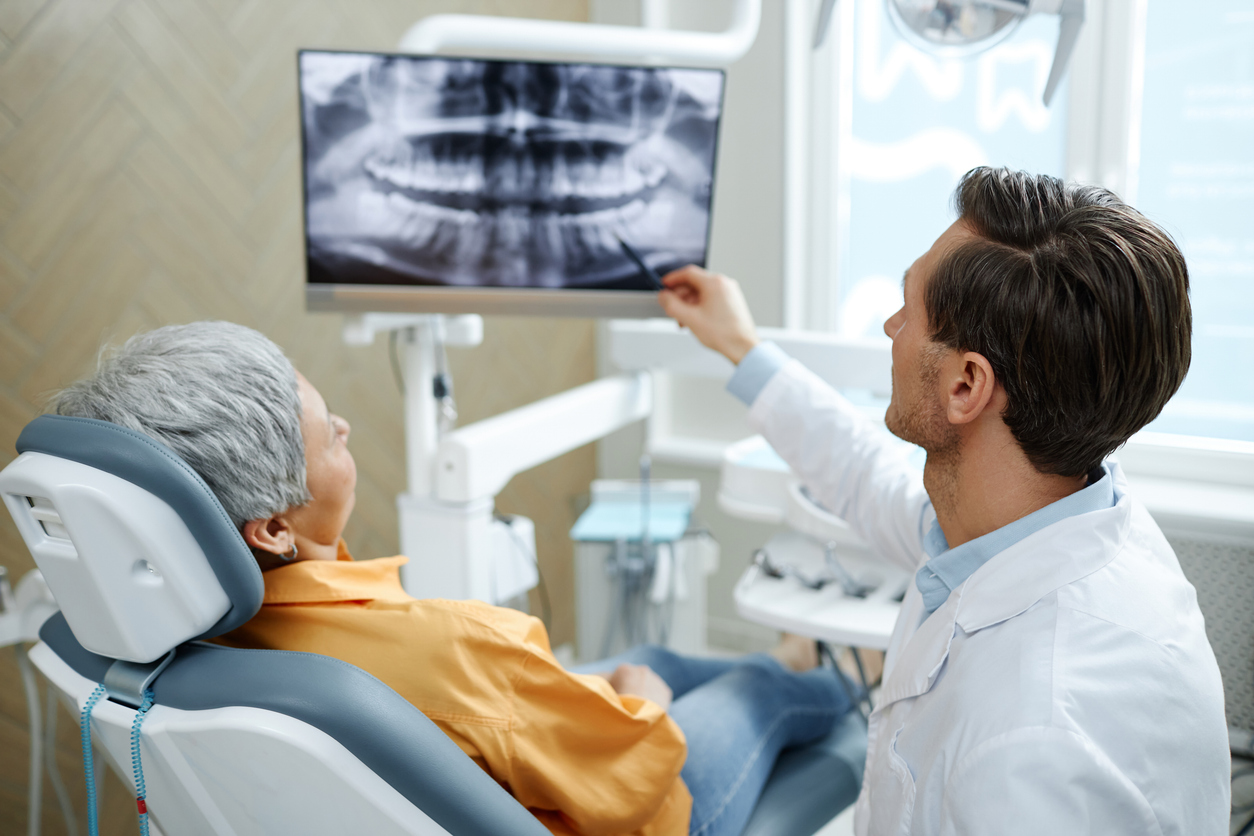
Follow each step of implant treatment, from your consultation and 3D imaging to placement, healing, and your final restoration.

After Implant Placement
Know what to expect in the days after surgery, including how to manage swelling, what to eat, and how to care for your new implant.
Cost of Dental Implants
Learn what affects the cost of implant treatment, how to compare quotes, and which insurance and financing options may help.
Visit Our Columbia Office
Our office is on Twin Knolls Road in Columbia, about a mile from The Mall in Columbia and Merriweather Post Pavilion, with easy access for patients coming from across Howard County.
Columbia Oral & Facial Surgery Center
5397 Twin Knolls Road, Suite 18
Columbia, MD 21045
Phone: (410) 730-6001
Office Hours
Monday: 8:00 am to 4:00 pm
Tuesday: 8:00 am to 4:00 pm
Wednesday: 8:00 am to 4:00 pm
Thursday: 8:00 am to 4:00 pm
Friday: 8:00 am to 4:00 pm
Saturday and Sunday: Closed

A Team Approach to Implant Surgery
Dental implant treatment is a partnership between your oral surgeon and your restorative dentist. Dr. Wu and Dr. Woodward perform the implant surgery, along with any tooth extractions and bone grafting you may need. Your dentist then designs and places your permanent crown, bridge, or denture, as well as any temporary teeth you wear during treatment.
Advances in implant technology mean many patients can receive single-stage implants, which don't require a second procedure to uncover them before the final teeth are placed, after at least six weeks of healing. In some cases, the implant can even be placed at the same appointment as the extraction, and socket preservation or a sinus lift can prepare the site when extra bone is needed.
Treatment planning starts with 3D imaging of your jaw, and anesthesia options help keep you comfortable during surgery.
Schedule Your Implant Consultation
Ready to replace missing teeth? Schedule a consultation at our Columbia office to learn which implant option is right for you and receive a treatment plan and price quote for your case. We welcome patients from Columbia, Ellicott City, Clarksville, Laurel, Elkridge, Catonsville, and Marriottsville.
Frequently Asked Questions
Am I a candidate for dental implants?
Most adults who are missing one or more teeth and are in good general health can be considered for implants. Your surgeon will review your health history and use 3D imaging to check the amount and quality of your jawbone. If there isn't enough bone, a bone graft can often build it up first.
How long does the dental implant process take?
It depends on your treatment. After the implant is placed, the bone usually needs at least six weeks to heal around it before the final teeth are attached, and longer if a bone graft is needed. In some cases, a temporary tooth can be attached the same day, and Teeth-in-an-Hour™ can provide fully functioning teeth in a single procedure.
Does getting a dental implant hurt?
Implant surgery is performed with local anesthesia, and sedation options are available to keep you comfortable. Most patients have some soreness and swelling for a few days afterward, which can usually be managed with medication and the care instructions we provide.
Does dental insurance cover implants?
Coverage varies by plan, so check with your dental insurance carrier to see what portion, if any, is covered. Health care credit companies also offer financing options for implant treatment.
How long do dental implants last?
When they're properly placed and cared for, dental implants can last a lifetime. Good home care and regular visits with your dentist help protect your investment.